
Grounding Sheet vs Grounding Mat: Which One Fits Your Routine?
If you have decided to try earthing but are not sure where to begin, the question usually comes down to one choice: a grounding sheet or a grounding mat. Both work on the same principle. They place your skin against a conductive surface that is linked to the earth, so the charge your body picks up during the day has somewhere to go. The difference is where and how you use them, and that is what should drive the decision.
How grounding products actually work
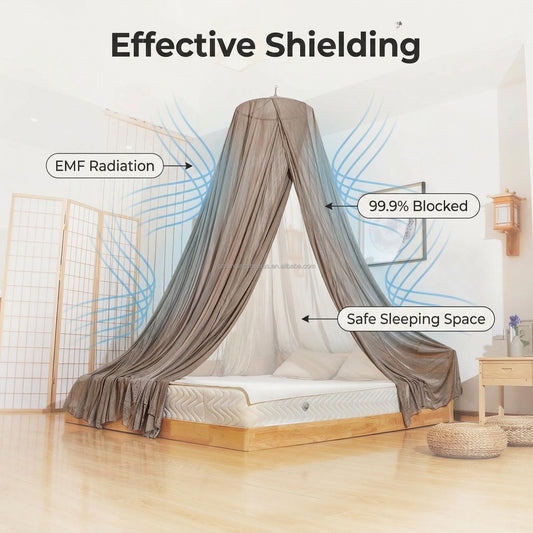
An earthing product is not a gadget. It is a conductive surface plus a connection. In our bedding and mat products the conductive layer is a blend of silver fibre, which is why you will see specifications such as 10% silver fibre on our grounding sheets and pillowcases, and 100% silver fibre on the 100% Silver Fiber EMF Canopy with Grounding Cord. Silver is used because it conducts well, stays soft against the skin, and survives repeated washing far better than a bare metal mesh.
The second half of the equation is the cord. A snap connector on the product attaches to a grounding cord, and the cord either plugs into the ground pin of a properly earthed wall outlet or runs outdoors to a Grounding Rod driven into the soil. If you need extra length, a second connection point, or a different plug shape, a Grounding Cord with Adapter Splitter covers it.
Grounding sheet vs grounding mat: the practical differences
Think of the two as different sizes of the same idea.
- Coverage. A sheet covers most or all of the mattress, so a large area of skin stays in contact for the whole night. A mat covers a smaller area, typically where your feet, legs, or forearms rest.
- Time in contact. Sheets are used while you sleep, which is the longest uninterrupted window most people have. Mats are used in shorter sessions.
- Portability. A mat rolls up and travels easily. A fitted sheet is sized to a bed and stays there.
- Routine. Sheets suit a passive habit. Mats suit an active one.
When a grounding sheet is the better fit
Choose bedding if you want earthing to happen without thinking about it. Night is the easiest time to be consistent, because the hours pass whether or not you remember them.
A few options are available depending on your bed and the feel you prefer. The Grounding Sheet 10% Silver Organic is the flat sheet, laid over or under you as you sleep. The Grounding Fitted Bed Sheet stretches over the mattress and stays put, which helps in a shared bed. If you want the whole bed dressed in matching conductive fabric, yonwold Grounding bed Sheets are the set version.
For sleepers who mainly notice tension in the neck and shoulders, a Grounding pillowcase 10% silver fiber adds contact at the head without changing the rest of the bed. It is also the least intrusive way to test whether earthing suits you before investing in full bedding.
When a grounding mat is the better fit
Mats win on flexibility. If your problem is not sleep but the eight hours you spend sitting, a mat under your feet or forearms is the more useful tool.
The Grounding Mat is the general purpose option: desk, sofa, floor, wherever you settle. The Grounding Mat Sleeping is made for the bed or a nap, and is a common choice for people who want to try grounding at night without replacing their bedding, or who travel and want the same surface in a hotel room.
What to check before you buy
Three things matter more than marketing claims.
- Silver content and fabric. Higher silver content generally means better conductivity and durability. Sheets and pillowcases at 10% silver fibre are the everyday standard, while the canopy uses 100% silver fibre.
- The connection hardware. Confirm the product includes a snap connector and grounding cord, and that the plug matches your outlets. Adapters are inexpensive to add, but annoying to discover late.
- Care instructions. Conductive fabrics tolerate washing, but harsh bleach and fabric softener shorten their life. Follow the label.
Setting up and checking the connection
Setup is quick. Attach the cord to the snap connector, route it so nobody trips, and plug into a properly earthed outlet, or run it to a rod outdoors if you prefer a direct soil connection. Some people keep a conductivity tester on hand to confirm the surface is conductive before first use and again after washing.
If you are unsure whether an outlet is properly earthed, have a qualified electrician check it. This is the one step where guessing is not worth it.
Reasonable expectations
Earthing is a comfort and wellness practice, not a treatment. People who use it often describe it as a way to wind down, and some research suggests that contact with the earth may support relaxation and a sense of calm. Results vary between individuals and the evidence is still developing. Earthing products are not intended to diagnose, treat, cure, or prevent any disease, and they are not a substitute for medical care. If you are pregnant, use a pacemaker or another implanted electronic device, or manage a medical condition, talk to your doctor before starting.
So which one?
If you want the habit to run on autopilot, start with bedding. If you want to test the idea with the least commitment, start with a pillowcase or a mat. Many people end up with both: a sheet for the night and a mat for the desk, connected through the same grounding cord system.